
'By November 2020, men recovered most of their lost jobs, but women were less fortunate: 49 per cent of the job losses by November were of women.' 'The recovery has benefited all, but it benefited women less than it did men,' notes Mahesh Vyas.

'The large scale and widespread shrinking of the labour force in November, the peaking of unemployment in October and the fall in lead indicators in October and November point towards a worsening of the slowdown of the Indian economy in the third quarter of 2019-20,' says Mahesh Vyas.

Employment in India saw a V-shaped recovery after being adversely impacted between April and June 2020 during the Covid lockdown and during April-June 2021, when the second wave struck, said Krishnamurthy V Subramanian, former chief economic advisor, in a paper released on Friday. Subramanian is now serving as executive director of the International Monetary Fund (IMF). From the official survey data of the National Sample Survey Organisation (NSSO), the paper titled 'Employment in India: Data Sources, Facts, and Trends' showed that both worker-population ratio (WPR) and labour force participation rate (LFPR) were higher, while the unemployment rate was lower during October-December 2022 when compared to the corresponding quarter in 2019.

Violence is just too stark, too TRP friendly and so it gets a lot of attention in the media. But the crime of discrimination is much worse because it is much greater, it attracts no attention and it has no recourse, says Mahesh Vyas.

According to NSSO, more than half of India's working-age population is out of labour force. In 2017-18, the youth unemployment rate was in the range 13.6-27.2 per cent.

NITI Aayog has not said what the reasons were for having achieved or not having achieved what was sought to be achieved, or what lessons can be learned for the future, points out Aakar Patel.

A report stated that despite initial setbacks from demonetisation and Goods and Services Tax, "all in all" the Indian economy has done well.

'When manufacturing or even services cannot generate the kind of employment they are looking for, they prefer to be unemployed rather than under-employed.'

Only one in four workers in Karnataka receive a salary, the lowest among the four industrialised states of India, a Business Standard analysis of the latest annual Periodic Labour Force Survey (PLFS) data shows. While 31.6 per cent workers in Gujarat receive regular wages (or salaries), followed by Tamil Nadu (30.3 per cent) and Maharashtra (29.4 per cent), only 25.7 per cent workers in Karnataka receive the same. The figure stands at 21.5 per cent at the national level, according to the 2021-22 PLFS data.

Users of employment / unemployment statistics can enjoy the benefits of -- initially the speed of private enterprise and then, the stamp of official statistics with a hopefully small time lag, says Mahesh Vyas.

Youth unemployment (ages 15 to 29) is higher than the national average of 12.4 per cent in Telangana (14.2 per cent) and Rajasthan (13 per cent), followed by Chhattisgarh (6.7 per cent) and MP (6 per cent).

'Over the next 20 years, we would be adding almost 10 million people to the workforce every year!' 'And we won't be able to give employment to even 2 million out of the 10 million every year.' 'Don't forget, it keeps adding every year.'

Former Reserve Bank Governor Raghuram Rajan said India will still remain a lower middle country if the potential growth rate remains at 6 per cent annually without any rise in population by 2047 (Amrit Kaal) and will be reaching the end of the demographic dividend by then. Speaking at a programme organised by Manthanon on Saturday, the economist said if the country does not grow faster, it will grow older (demographically) before it gets richer, which means there is the burden of an aging population to deal with also at that point. Rajan said the GDP growth in India for the past two quarters was in the region of 7.5 per cent and if one looks at the labor force participation, it is very low and when it comes to female participation, "it is the lowest in the G20".

'The rise in unemployment, underemployment, discouraged workers and job insecurity is likely to continue, with very adverse consequences for the nation's economic well-being and social cohesion,' warns Shankar Acharya.

Get more people working, get more people working in modern manufacturing and services in our cities, and get people working better and longer, suggests Naushad Forbes, past president, CII.

Marriage is the most common purpose of migration, with 49 per cent migrating for marriage, followed by moving with households (15 per cent) and work/employment (10 per cent), discovers Devanik Saha.

The substantially increased economic dualism may exert lasting negative influences which could include a reduced potential for economic growth; the persistence of a very weak employment and poverty situation; rising social and political discord; and heightened vulnerability to geopolitical challenges, cautions Shankar Acharya, former chief economic adviser to the Government of India.
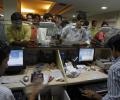
Through the past few decades, India has been transformed from a largely agriculturally-oriented economy to one in which the services sector accounts for an overwhelming share of gross domestic product (GDP).
The Survey noted that while women account for almost half of India's population, their participation in labour market is almost one-third and has been declining.
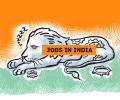
The problem of unemployment is spread across the economy.

'When women act assertively, express anger or vocalise their accomplishments -- examples of characteristics that are seen among leaders in most organisations -- they often receive pushback because these behaviours do not align with traditionally feminine attributes.'

Growing at a robust rate due to economic reforms in key sectors like digitisation and infrastructure, India has emerged as a star performer and is projected to contribute more than 16 per cent of the global growth, the International Monetary Fund said on Monday. "What we have been observing for quite some time now is that India has been growing at a very robust rate. "It's one of the star performers when it comes to real growth when you look at peer countries.

After assuming power in 2014 with a full majority of its own, the BJP-led NDA government started an ambitious process of reforming labour laws in the form of codes aimed at making the framework less cumbersome with a variety of alterations. It had planned four codes each for industrial relations, wages, social security and welfare, and occupational safety, health and working conditions. To this end, 35 central labour laws were to be converted into four codes that would have had the virtue of streamlining labour relations. But none of the proposed code Bills could be converted into a law principally because neither trade unions nor industry representatives came on board. They hold the key to India's low-growth-high unemployment paradigm but the government may struggle to push them through this time as well. Somesh Jha explains why

India's per capita GDP of $5,238 in 2013 was 65 per cent lower than Iran, 54 per cent lower than Maldives, 44 per cent lower than Sri Lanka and 27 per cent lower than Bhutan, according to the Human Development Report 2015

The report has identified some areas that need attention from India's policymakers.

The elements are all aligned to make India a global powerhouse, says IMF Managing Director Christine Lagarde.

India has performed poorly in removing gender-based disparities, ranking 114 out of 142 countries in World Economic Forum's 2014 gender gap index, scoring below average on parameters like economic participation, educational attainment and health and survival.

One popular strategy is to hire contract workers.

Making employers provide creche facilities would be a powerful incentive for women to stay on in the workforce rather than drop out owing to the pressure of child care, says Shuma Raha.

This could be a major drag, not just on the empowerment of women but on the India growth story as well.

American economic historian and labour economist Claudia Goldin won the 2023 Nobel Economics Prize for her work examining wage inequality between men and women, the Royal Swedish Academy of Sciences said on Monday. The Sveriges Riksbank Prize in Economic Sciences in Memory of Alfred Nobel 2023 was awarded to 77-year-old Claudia Goldin "for having advanced our understanding of women's labour market outcomes" the prize-giving body said in a statement. Goldin will receive 11 million Swedish kronor, or around $1 million, as the sole winner of this year's prize.

'The new government will have to contend with slowing economic growth, weak private investment, anaemic exports and vulnerable external imbalances, a stressed financial system, mounting fiscal pressures (including high government debt-to-GDP ratios) and an exceptionally bad employment situation,' says Shankar Acharya, former chief economic adviser to the Government of India.

Any narrative against the Dravidian model may impact the BJP's prospects in Tamil Nadu. This may explain why the BJP in Tamil Nadu is placing more emphasis on corruption allegations against the DMK, even as the party focuses nationally on the Sanatana controversy.

India retains the tag of the fastest growing country among the world's major emerging economies

Reasons include include dropping out of education, raising children and family pressure

It was women who unambiguously bore the brunt of the lockdown joblessness, says Kanika Datta.

'There shall be no change in India-Japan ties,' predicts Rajaram Panda.

Indian women have education, inspiration and perspiration -- but not enough employment, points out Mahesh Vyas.

India must first improve working condition, then it can concentrate on Make in India concept.

Whether India can create labour-intensive factory jobs instead that it needs to put millions to work in the next few years looks very unlikely.
